Are college students voting?
- Maddie Shelton
- Nov 25, 2024
- 6 min read

By Madelyn Shelton, Addi Broadfoot, Victoria Bullion and Grace Parke
Voting has been a key factor in the United States of America since the founding fathers established democracy in 1776. The past three elections have become a battleground for both presidential and federal candidates in the United States. However, the more election seasons progress, the more Generation Z and other even younger generations become eligible to vote.

In 2024, the U.S. held its breath, wondering if the gaps between the ages would sway any of the votes. According to USA Today, “The NBC News Stay Tuned Gen Z poll, powered by SurveyMonkey, found that 50% of registered voters ages 18-29 would vote for Harris, while 34% would vote for Trump. Six percent said they would vote for someone else and 10% said they wouldn’t vote.” However, despite such national trends, the state of Alabama has consistently shown a staggering advantage to President-elect Donald Trump, regardless of age range. On a more local scale, with Florence, Alabama being a college town, questions were raised on the accessibility and availability for college students to exercise their right to vote this election season. (Photo courtesy of Syracuse University)
In past elections, it has been proven that young voters can have a major impact on results. We saw this in 2020, with the youth vote giving the Biden administration the edge that they needed to win. However, according to voting statistics conducted by Circle, youth turnout dropped from 50% in 2020 to 42% in 2024. Was there a decrease in political interest, or do they just not know how to go about voting? Emmaline Tyree, a freshman at the University of North Alabama, shared her experience with voting on November 5th.

“It was my first time,” she said. “I was nervous going into it, but it was actually so much fun!” Tyree voted at the Central Heights Community Center in Florence, Alabama. When poll workers found out she was a first-time voter, they rang a bell for her and made sure she knew what to do. All day long, they did this for every first-time voter. They understood that it is important for young people’s voices to be heard now more than ever. If they have a good first experience, they will be more likely to return. “It made me feel a lot more comfortable on such a stressful day.”
Emmaline Tyree plans to encourage her friends at the University of North Alabama to register and vote in 2026.
The Drive That Determined College Student Votes
Students from across the nation navigate to their hometowns to cast their votes. Some students are at a disadvantage due to the distance. Most students find it difficult to deter from their school or work schedule to travel home. There are ways to work around the concern of commuting and students are asking how.
According to Vote.Gov, “voter registration is tied to where you live.” It is important to note that if you live in one or more locations, you are only permitted to vote at the place you registered. Depending on the state residency requirements, Vote.Gov shares that citizens registered to vote may re-enroll in the city where they are actively stationed. This option simplifies the hassle of having to travel. (Photo courtesy of the Floridian)

“It was easy for me to vote since I am from the Florence area,” said Harrison Haygood, a University of North Alabama student. “I can’t imagine how hard it would be to live in another city or state. Having to drive there is crazy but definitely worth it.”
This restraint is one of the reasons for students not submitting their votes. People on campus continue to push for active participation in voting. As young voters, showing care about who is running for office is crucial.
Everyone has their reason for who they believe should represent our country, but we cannot put it into existence if people continue to exclude themselves from voting. As American citizens, we are privileged to share our input, so why let this roadblock keep you from your rights?
The Impact, Benefits and Consequences of Voting as a College Student
Not all students are local to the Shoals area, and some did have to make travel arrangements. The vast majority of students publicly shared their concerns about the presidential election. The location restriction is that students must vote where they are registered. Unfortunately, some students were unaware they could re-enroll where their active residency lies.
“I did go home to vote in Savannah, Tennessee, and it was out of the way for me,” said Elijah Rainey, a University of North Alabama student. “Maybe next time I will look into how I can vote without leaving the city.”
At Vote.Gov, the United States Government shares an invoice that students should know. While attending college, it is up to you to choose where to register. Things to consider: location convenience, who is on the ballot and whether the policies or particular issues are important to you.
If you’re voting in your hometown, avoid using your permanent address and opt for your current mailing address. Another option is acquiring your state guidelines for mail ballots. Some states issue that you are allowed to ask for a mail ballot if unable to attend in-person voting.

There is a separate set of regulations for voting in a different town. According to Vote.Gov, you may have to live in your college town for a certain amount of time before registering there. Confirm your eligibility, as it is essential to include your address, on or off campus. Please refrain from using a campus mailbox address for registration; you can use it as the mailing address. If you are concerned about being registered at a different residency, update your voter registration with your current address. (Photo courtesy of Politico)
For students who live out of state, the option to commute gets more severe. In some states, a student or resident must live there for so many days before registration.
Local election officials do not require you to cancel your registration, but it does help when collecting your vote.
Are you unsure whether you can vote while studying abroad? Students are allowed to vote wherever they are in the world as long as they are active U.S. citizens.
The impact that voting has on students is significant, considering that younger generations gather that their input makes a difference. The benefits of voting bestow a person with the mindset that they made an impact. The consequences are the downfall or uprising for the candidate you did or did not vote for. The people of America press for their country to be a place of substantiality. Continue to vote so you can turn your perception into a reality.
While the 2024 election has passed, this information is still crucial for future elections. According to The Hechinger Report, 66% of college students voted in the 2020 election, 14% higher than the 2016 election. However, the 2024 election saw a drop to 42%. Are students becoming less politically motivated, or are they simply unsure how to vote?

According to the same report, “Young people say that they’re propelled by concerns that directly affect them, such as global warming, the economy, reproductive and LGBTQ+ rights, student loan debt and gun safety.” These issues have encouraged young people, specifically college students, to make their voices heard. However, many students still face uncertainties about where and how to vote. (Graphic courtesy of University of Southern California)
“I felt unprepared this election,” said Shellyn Jenkins, a University of North Alabama student. “I had to miss class and drive two hours to my hometown so that I could vote.”
In 2024, many universities created voting education groups, gave out sample ballots and some encouraged professors to spend lecture time informing students on how to vote. Some states, such as s California, Colorado, Maryland, Minnesota and Wyoming, encourage using universities as polling places (according to the National Conference of State Legislatures). This is a wonderful way to keep students informed and encourage them to vote. Additionally, using campuses as polling places ensures that students feel more comfortable and can ask questions if needed.
“I’ll be staying in town to vote next year,” said Jenkins. “This would have been great to know before I went through so much trouble.”
Many students like Jenkins wish that polling places were more widely discussed on college campuses. In years to come, it could be beneficial for city officials and college administration to hold events, create infographics and post announcements to help unaware students.
Whether a student has to travel near or far to vote, Generation Z has made it clear that they want their voices heard. If students are aware that they can vote in their college towns, young voter turnout will likely spike. Every year the United States government works to make voting as convenient as possible while still ensuring the safety and legitimacy of one's vote. The best way to stay informed on voting locations, statistics and more is to visit the National Association of Secretaries of State. On this website, one can view their voter registration status, where they are to vote and more. As aforementioned, voting in the United States of America is not only a privilege but a right for everyone's voice and concerns to be heard. Ensure that you are registered to vote for all upcoming elections at Vote.gov.
Want more information about voting? Click here to watch a video!
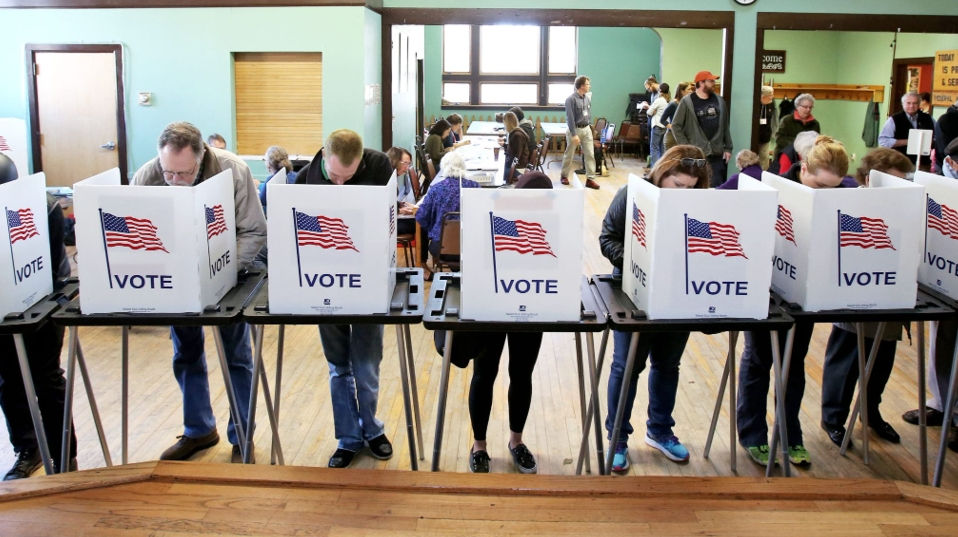
(Photo courtesy of the Daily Times)


Comments